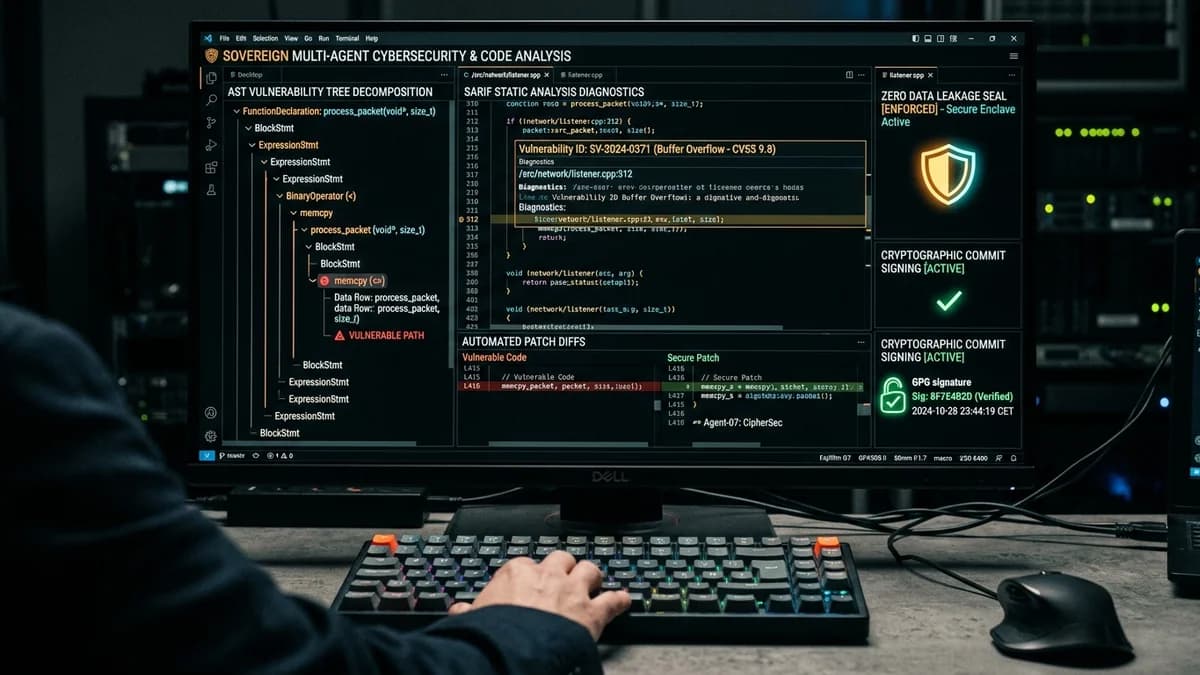
How it works: In the Discovery phase, 4 specialized static analysis and dependency audit engines (Gitleaks for secrets, Trivy for CVE vulnerabilities, OSV-Scanner for software supply chain, and Ruff for Python code quality and anti-patterns) stream raw alerts unified into the open SARIF 2.1.0 standard. Next, the Verification phase activates: an adversarial reviewer agent receives full AST and dependency context, subjecting each detected anomaly to a falsification test. The verifier proves whether a vulnerable code path is actually reachable or neutralized by outer guardrails. The result is noise reduction from dozens of raw alerts down to confirmed, indisputable defects.
Autonomous Fix Sessions: Rather than dumping disconnected code snippets on developers, the platform creates an isolated git branch (fix/code-analyzer-*), applies a surgical diff, and executes the project's local test suite to verify no regressions occurred. Only fully validated patches with before/after SARIF telemetry are presented as PRs.
Sovereignty and architecture: Packaged as a native Electron desktop workstation paired with an on-premise background daemon, all syntax parsing, engine execution, and repository operations stay strictly within the developer's machine or self-hosted CI/CD runner. Zero proprietary source code or credentials ever egress into third-party cloud infrastructure.
Honest boundaries: Cashcrown AI Code Analyzer neutralizes routine technical debt and concrete security flaws, but it does not replace deep human penetration testing of complex business domain logic. Remediated patches in isolated branches always require final engineer review prior to merge (human-in-the-loop).